Let’s Talk about Foreclosures

It’s about perspective, not panic.

Your Uncle Bob, who “knows a little something about real estate,” is telling you that foreclosures are ticking up. He says that you should wait to buy until you can get a good deal.

Is he right?

Not really.

It is true that foreclosures are rising. But they are nowhere near the crisis level that Bob is suggesting. Here’s why.

Take a look at serious delinquencies – loans where the homeowner is more than 90 days late on their mortgage payments.

While those have increased slightly, data from the New York Fed shows they still remain low. And they aren’t anywhere close to levels seen when the market crashed (see graph below):

Right now, about 1% of mortgages are seriously delinquent. That’s only 1 in 100.

In the years around the crash, they were up around 9%. That’s 1 in 11.

That’s a big difference.

And it’s important to remember not all delinquencies even become foreclosure filings. Some homeowners who are falling behind will work out repayment plans with their banks and lenders because banks don’t want to see a wave of foreclosures either.

That’s why foreclosure numbers are even lower than delinquencies. ATTOM shows only 0.3% of all homes are currently going through a foreclosure filing. And some of those won’t even all go to a full foreclosure. That’s not a wave. That’s a ripple at most.

If People Are Falling Behind on Payments, Why Aren’t There Even More Foreclosures?

Maybe you’re wondering, if people are struggling financially, why aren’t there more foreclosures? Here’s the easiest way to answer that.

When households feel financial pressure, they tend to prioritize their mortgage payment above almost everything else. Because the last thing they want to lose is their home.

More data from the New York Fed shows serious delinquencies have risen more for credit cards and auto loans (the blue and green lines). But mortgage delinquencies and home equity lines of credit (borrowing against the value of your home) aren’t seeing the same big uptick (the yellow and orange lines). They’re a lot more stable overall.

In other words, people may fall behind on other debts, but they fight hard to keep their homes. And, in today’s housing market, they’re also in a strong equity position to do so.

Home Equity Changes Everything

Many people have built significant equity over the past several years. And that creates options. As Daren Blomquist, VP of Market Economics at Auction.com, explains:

“Distressed homeowners… many times they still have equity in their homes. There’s an opportunity for them to sell that home, avoid foreclosure, and walk away with equity.”

That’s a major difference from 2008. Back then, many homeowners owed more than their homes were worth. And selling wasn’t an easy solution. Today, for many people, it is. And even in situations where equity isn’t enough, homeowners are encouraged to contact their loan servicer early to explore alternatives to foreclosure.

Bottom Line

Are foreclosure filings rising slightly? Yes. Are they anywhere near crash territory? No. And homeowners today have far more equity and flexibility than they did during the crash.

If you’re concerned about what you’re seeing in the headlines, the best move isn’t panic, it’s perspective. And the data right now says this isn’t 2008 all over again.

If you’re not sure that this is the right time for you to make a change, you can always find us at 508-388-1994 (Mari and Hank) or 781-423-8662 (Colleen). We can walk you through your options.

Mari, Hank, and Colleen

Nothing herein should be construed as investment advice. You should always conduct your own research and due diligence and obtain professional advice before making any investment decision.

Advantages of Being a Spring Seller

If you’re going to sell this year, why not do it when the odds are in your favor?

If you’re thinking about selling, you’re hoping for: plenty of interested buyers, strong offers, and a short timeline.

And spring is the season that most often delivers all three.

So, if a move has been on your mind this year, this is the window where momentum tends to work in your favor. Here’s what makes this season so powerful for sellers.

1. More Buyers Will Be Looking

Typically speaking, there’s no more popular time to move than the spring. Historically, data coming out of ShowingTime proves this is the time when buyer activity peaks each year. Take a look for yourself (see graph below):

And this year, there’s more than just the seasonal trend working in your favor. Mortgage rates are also sitting near three-year lows and that combination matters.

More buyers + improving affordability = more eyes on your house.

That doesn’t mean the market will return to the frenzy of the pandemic – far from it. But it does mean more buyers will be ready to re-enter the market. And that’s good for you. As Redfin says:

“Homebuying demand is improving . . . and mortgage-purchase applications are sitting near their highest level in three years. . .”

You should make sure your house is listed so you can take advantage of the uptick in demand. Because more activity means one thing: more opportunity to get a deal done.

2. You May Get More Offers

With more buyer demand, it makes sense that you may get more offers on your house. And history shows that’s usually true.

If we look at the data for the last three years from the National Association of Realtors (NAR), and take the averages for each month, it’s clear sellers in the spring get more offers (see graph below):

Don’t expect the excessive bidding wars that were so famous in 2020 and 2021. But it does mean, seasonality could help you out this spring. As Realtor.com explains:

“Spring typically brings out more buyers who are ready to make a move before summer. Listings see more views, showings, and offers during this season.”

On Cape Cod, being in their new home by summer is obviously a priority for many buyers.

3. Homes Usually Sell Faster

There’s one more predictable pattern that happens pretty much every spring: homes sell faster (see graph below):

On average, homes sell 20 days faster in the Spring compared to the Winter. That’s almost 3 weeks shaved off your timeline. And that’s a difference you can feel.

Since homes have been taking longer to sell lately, listing your house during what’s usually the most active time of the year means you’re setting yourself up to move as quickly as possible. And isn’t that what you really want?

The faster your home sells, the earlier you can move on to what’s next for you.

If you’re eager to go on to your next chapter, whether it’s to downsize, or because you’ve run out of space, spring may be your best time to sell. 

Bottom Line

Spring doesn’t guarantee a sale. Strategy still matters. But this season gives you something valuable: momentum.

More buyers. More activity. More opportunity.

We can tell you that the three of us were busy this past weekend with buyers and expect the activity to continue in the days and weeks ahead.

Let’s talk about what selling this season could mean for your house and your timeline. You can always find us at 508-388-1994 (Mari and Hank) and 781-423-8662 (Colleen).

If you’re going to sell this year, why not do it when the odds are in your favor?

Mari, Hank. and Colleen

Nothing herein should be construed as investment advice. You should always conduct your own research and due diligence and obtain professional advice before making any investment decision.
#1 Mistake Sellers Are Making

Do you want to sell your home for the most money and in the least amount of time?

There’s one decision you’re going to make when you sell your home that determines whether your house sells quickly, or it sits. Whether buyers make an offer, or scroll past it. Whether you walk away with the maximum return, or you end up cutting the price later.

And that’s your asking price.

The #1 Mistake Sellers Make Today: Trusting the Wrong Number

If you’re thinking about moving and trying to figure out what your house may sell for, it’s tempting to start with an online home value tool. They’re fast, free, and easy. And you don’t have to talk to anyone. But here’s the problem: they don’t know your house.

And that can be a bigger drawback than you realize.

Where Online Estimates Fall Short 

Online tools often lag behind the market. They look in the rearview mirror, relying on closed sales and delayed information. And in that sense, they’re using incomplete data.

Why?

Some important information just isn’t available online. Bankrate explains:

While these tools can be a useful starting point, keep in mind that they typically do not provide the most accurate pricing. Algorithms can only rely on the information available; they can’t account for things like a home’s condition or renovations made since the last public information was updated.”

They can’t see:

  • The unique features that make your house special,
  • All the work you’ve put in to keep it in good condition,
  • Or, how in-demand your specific neighborhood is right now.

So, while they may do a good job in some cases, they can’t be as accurate as we are.

In a market where buyers have more options, a seemingly small margin of error can cost you thousands if you price too low, or weeks of lost momentum and time if you price too high.

If you want to sell for the most money and in the least amount of time, you don’t want the fast answer on how to price your house. You want the right one.

That’s why the savviest homeowners today don’t rely on algorithms when it actually matters. They rely on people, specifically trusted local agents.

What an Expert Agent Brings to the Table

According to 1000Watt, sellers overwhelmingly believe real estate agents have the best sense of a home’s true value, far more than any automated tools.

That confidence isn’t accidental. As Bankrate puts it:

“A professional appraiser or real estate agent can visit the home in person, assess the neighborhood as a whole as well as the individual property, perform more thorough market research, and consider subjective details.”

And those details matter. We don’t just pull reports. We know what’s happening right now:

  • What buyers are paying this month, not last month, or even last year,
  • How your home compares to the current competition in your neighborhood,
  • Which features add value based on what buyers are willing to pay for today,
  • How to price your house to create urgency in this market.

And once we visit your home, we may even find your online estimate undershot your value. So, if you used the estimate you got online, you’d actually be leaving money on the table. And no one wants that.

Bottom Line

While online tools can give you a rough starting point, only local experts like us can give you a price that actually works.

If you want to know the right number for your house, not just the easiest one to find, let’s connect. You can always find us at 508-388-1994 (Mari and Hank) or 781-423-8662 (Colleen).

Talk soon…

Mari, Hank, and Colleen

Nothing herein should be construed as investment advice. You should always conduct your own research and due diligence and obtain professional advice before making any investment decision.

Four Ways Your Equity Can Work for You

Two-thirds of homeowners have a substantial amount of equity today.

Are you sitting at home today wondering if your house still works for you?

With everyone at home and unable to go outside because of the weather are you realizing that it’s just too small? Or are you closing doors and shutting off heat in rooms you haven’t used in years in order to keep utility bills down as you wait out the storm?

You may have heard that as a homeowner you have a lot of equity built up in your property. But what does that really mean?

Because your equity isn’t just a number, it’s a powerful asset that can help you take your next big step in life which could mean upsizing, downsizing or maybe saying goodbye to the cold weather.

How Much Equity Does the Typical Homeowner Have?

Here’s how it works. As you pay down your loan and home prices rise through the years, the share of your home that you own free and clear grows. That’s your equity.

And according to data from the Census and ATTOM two-thirds of homeowners have a substantial amount of it today.

  • 39% own their home outright without owing anything on it.
  • Another 27% have at least 50% equity in their homes (see chart below):

That’s a big deal. And just in case you’re wondering how that translates into real dollars, Cotality says the typical homeowner has almost $300k in equity today. That’s six figures.

And whether you have that much, even more, or a bit less, here are a few examples of how you can use it. 

1. Move Into a Home That Better Fits Your Life

Your needs change over time. Maybe your home is starting to feel cramped, or maybe you have more space than you need that your adult children have moved out. Either way, you can use your equity as a down payment on a home that’s a better fit for what you need now and going forward. You may even have enough equity to buy your next house in cash

2. Upgrade Your Current Home

If you’re not ready to move just yet, you could reinvest some of your equity in your current home instead. Renovations like a kitchen refresh or updated bathrooms could add value when it’s time to sell down the line. Finishing your basement might provide your family more elbow room. Replacing windows could help with those high utility bills. Just be sure to talk to us before you tackle your project list, so you can prioritize updates that’ll give you the biggest return later on.

3. Fund a Major Life Goal

Equity can also help fund your life goals – whether it’s starting a business, saving for retirement, covering education costs, or helping out someone you love. Some homeowners are even passing down some of that wealth to help fund a loved one’s down payment on a home.

4. Avoid Foreclosure in Tough Times

While the number of home foreclosures continues to be small, if you’re struggling with payments, your equity can also be a lifeline. Many homeowners who hit financial hardships can sell their homes and walk away with money in their pockets instead of facing foreclosure. If that’s something on your mind, please talk to us about your options and how your equity can help. 

Your Next Steps

If you’re interested in using your equity for one of the reasons above, here’s what to do:

  • Step 1: Ask us for a personalized equity assessment on your home.
  • Step 2: Meet with a financial advisor if you’re interested in using that equity.

When it comes to tapping into this resource, there are a few things you’ll want to keep in mind – like making sure you still have a good loan-to-value ratio (LTV) even if you use some of your equity.

That means, as a general rule of thumb, you want to maintain at least 20% equity in your home as a financial cushion – something many homeowners didn’t know back in the crash of 2008.

The good news is, according to the Intercontinental Exchange, most of today’s equity meets that guideline:

“As of Q4, mortgage holders have $17.3T in home equity, including $11.2T in tappable equity ‒ accessible via cash-out refinances or home equity lines while maintaining 20% equity in the property . . . ”

Bottom Line

Your home equity is one of the biggest financial assets you have. Whether you’re thinking about moving, remodeling, or working toward a big goal, it’s worth exploring your options. Reach out to us to learn more.

You can always find us at (508) 388-1994 [Mari and Hank] or (781) 423-8662 [Colleen].

What’s one goal you have that you’d go after right now, if you had the funds to do so?

Mari, Hank, and Colleen

Nothing herein should be construed as investment advice. You should always conduct your own research and due diligence and obtain professional advice before making any investment decision.

Top 3 Reasons to Buy Before Spring

It’s not about rushing.

If you’re planning to buy a home this year, you may be focused on the spring market. You’re hoping that:

  • Mortgage rates drop a little more.
  • More homes hit the market.

But here’s what you may not realize. Buying just a few weeks earlier could mean paying less, dealing with less stress, and feeling less rushed.

Here are three reasons why accelerating your timeline over the next few weeks could actually be a better play.

1. Holding Out for Lower Rates May Not Pay Off 

A lot of buyers are hoping mortgage rates will fall even further. But that’s not the best strategy. Here’s why. Experts are pretty aligned on this: rates are expected to stay roughly where they are.

Forecasts throughout the industry all point to the same thing: rates are projected to be in the low-6% range this year (see graph below)

That’s not a bad thing, especially if you consider how much rates have already come down. Over the past 12 months, they’ve dropped roughly a full percentage point. And for many buyers, that means affordability has already improved more than they may realize. 

Locally, Cape Cod 5 has posted rates in the upper 5% range. (BTW… In our experience we’ve seen it is often easier to work with a local lender than one off Cape or in a different state or part of the country.)

So why wait a few more weeks just for more buyers to jump in and act as your competition? You already have a window right now. As Chen Zhao, Head of Economics Research at Redfin, explains:

“House hunters should know that this may be near the lowest mortgage rates fall for the foreseeable future.”

2. Spring Means More Competition + More Stress

Speaking of competition, the spring market is popular for a reason, but with popularity comes pressure. With more buyers active at that time of year, you’ll have to move faster once you find a home you like. And no one likes feeling rushed.

But buy now and you have more time to browse. Fewer people are looking, so homes sit longer.

You can see this play out in the data from Realtor.com (see graph below). In winter months, it takes an average of about 70 days for a home to sell. In spring? That drops to about 50 days. That’s a 20-day swing – and that pace is going to be more stressful.

Homes sell faster in the spring, and slower in the winter. And that can be a worthwhile perk for buyers who want to get ahead before their decisions start to feel rushed.

3. Prices Tend To Rise When Competition Heats Up

And here’s something most buyers forget to factor in. Prices usually respond to demand. So, when demand is higher, prices are too. Bankrate explains:

“Spring and early summer are the busiest and most competitive time of year for the real estate market . . . home prices tend to be steeper to reflect the increased demand.”

In fact, data from the National Association of Realtors (NAR) shows that in 2025, buyers who purchased in the beginning of the year saved roughly $30,000–$35,000 compared to those who bought when prices peaked in the spring or early summer.

And let’s be honest, every little bit of savings helps. That’s why buying just a few weeks earlier, before prices ramp up, will be better for you and your wallet.

Bottom Line

Buying a few weeks before spring isn’t about rushing. It’s about choosing to be ahead of the curve and knowing you want more leverage, less stress, and meaningful savings.

If you’re ready and able to buy now and want to get the ball rolling, let’s connect. You can always find us at 508-388-1994 (Mari and Hank) and 781-423-8662 (Colleen).

Mari, Hank, and Colleen – Mari Sennott Plus/Today Real Estate

Nothing herein should be construed as investment advice. You should always conduct your own research and due diligence and obtain professional advice before making any investment decision.
Mortgage Rates at 3 Year Low!

A mortgage rate affects more than just the interest you pay on your home loan.

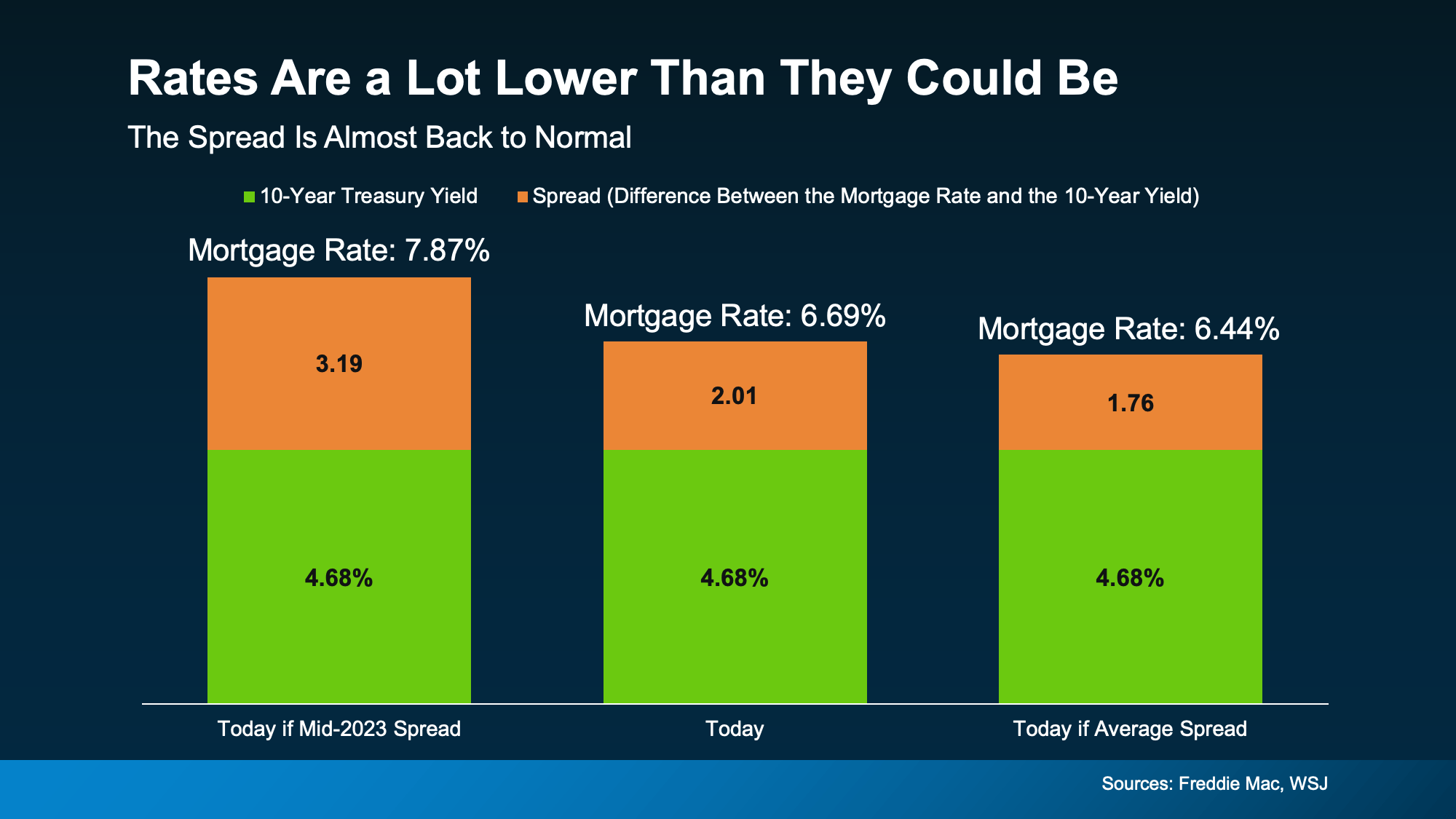
If you’re one of the thousands of homebuyers waiting for rates to fall, you should know it’s already happening. Rates recently crossed an important milestone when they officially dipped their toes into the 5s – something that hasn’t happened in about three years.

This moment marked a critical threshold. Now, rates are sitting in the low 6% territory. And forecasts by the experts project they’ll hover near this range throughout the year.

Here’s why that’s so good for you.

Why It’s Such a Big Deal

A mortgage rate impacts more than just the interest you pay on your home loan. It shapes your entire buying experience.

When rates were up around 7% just one year ago, a lot of buyers felt priced out. Payments were higher. Budgets felt tighter. Affordability was a bigger challenge. That’s especially true for first-time homebuyers, who felt the biggest pinch.

But according to industry experts, that’s starting to change now that rates are slowly inching down. Let’s break down why.

Right now, borrowing costs are in their lowest range in almost three years. And that can change the type of home you can afford.

At 6% or below, you’ll see:

  • Lower monthly payments. The payment on a $400k home loan is down over $300 compared to when rates were around 7%.
  • More buying power, thanks to the extra breathing room in your budget.

So, you can now make a stronger offer, purchase in a different location, or buy a home that checks more of your boxes. And that feels like a big shift compared to when rates were at 7%.

This Opens the Door for Millions of Buyers

To drive home just how much this helps potential homebuyers, consider research from the National Association of Realtors (NAR). It shows that when mortgage rates are at this level, millions more households can afford a home. When rates are at 6% or below:

  • 5.5 million more households can afford the median-priced home
  • And roughly 550,000 of those people will likely buy a home within 12 to 18 months

This isn’t speculation. That’s pent-up demand finally getting a green light. You have the chance right now to get ahead and buy before more people notice the game has changed.

Because whether rates stay in the low 6s or dip back down into the upper 5s, the math is already working in your favor. And the difference from a low 6% to a high 5% isn’t as big as you may think. But the difference from 7% to 6%? That is a very big deal, and it’s a number that’s already working in your favor.

Mortgage rates don’t operate in a vacuum. Home prices, local inventory, property taxes, home insurance, and your personal finances still matter.

Remember a rate in this territory doesn’t mean every home suddenly works for every buyer. That’s why getting pre-approved and running your numbers with a trusted lender is key. If you do not have a lender, please let us know. We can recommend several.

Bottom Line

Mortgage rates dropping to a 3-year low isn’t just a headline.

For many buyers, where rates are now could be the difference between watching from the sidelines and finally getting the keys to their next home.

If you’ve been waiting for a sign to re-run your numbers and see what’s possible now, this is it.

Let’s connect and take a look at what today’s rates mean for your budget and your options.

Mari, Hank, and Colleen

508-388-1884 (Mari and Hank)

781-423-8662 (Colleen)

The information contained, and the opinions expressed, in this article are not intended to be construed as investment advice. You should always conduct your own research and due diligence and obtain professional advice before making any investment decision.
Is a Myth about Credit Scores Holding You Back?

Even though a lot of people assume you need flawless credit to buy a house, that’s not necessarily the case.

Many would-be homebuyers aren’t sitting on the sidelines because they don’t want to buy. They’re sitting out because they think they can’t buy because of their credit scores.

According to a Bankrate survey, 2 out of every 5 (42%) Americans believe you need excellent credit to qualify for a mortgage. That may be why, when renters are asked why they don’t own, “my credit isn’t good enough” is often the answer.

Maybe you’re in the same boat. You look at your score, see it’s not where you want it to be or think it should be, and assume buying your first place just isn’t realistic right now.

But here’s what you need to know.

Even though a lot of people assume you need flawless credit to buy a house, that’s not necessarily the case.

You Don’t Need Perfect Credit To Buy a Home

So, where’s this myth come from? Part of the confusion stems from the fact that the typical homebuyer today does have a fairly strong credit score. In fact, according to data from the NY Fed, the median credit score for all buyers is 775.

But that doesn’t mean you need a score that high to qualify.

Looking at recent homebuyers, a number were able to get a mortgage with scores below that threshold. Data shows 10% of scores were around 660. Which means some were higher than that and some were lower, but the median in that lowest 10th percentile was around that range (see graph below):

So, even if your score isn’t as high as you want, that doesn’t automatically close the door. FICO explains that there is no universal credit score you absolutely have to have when buying a home:

“While many lenders use credit scores like FICO Scores to help them make lending decisions, each lender has its own strategy, including the level of risk it finds acceptable. There is no single ‘cutoff score’ used by all lenders, and there are many additional factors that lenders may use . . .

The best thing to do is to talk to a trusted lender to see what’s possible for you. Because a portion of buyers are buying with scores in the 600s – and maybe that means you can too.

Bottom Line

Your credit score is important. But that doesn’t mean it has to be perfect.

If credit has been the reason you’ve been waiting to buy a home, it’s probably time to take another look at your options. If you want help understanding where you stand and what your next step could be, connect with a local lender. We have worked with several and can pass on their contact information. Just reach out to us at 508-388-1994 or msennott@todayrealestate.com.

You won’t know where you stand unless you start a conversation.

Mari and Hank

Nothing herein should be construed as investment advice. You should always conduct your own research and due diligence and obtain professional advice before making any investment decision.

What’s the Value of Your Home?

In today’s economy, you should understand what your biggest asset is really worth. It could be life changing.

When was the last time you checked on the value of your home?

If it’s been more than a year, then it’s time to find out.

Most homeowners know they’ve built up significant equity in their homes, but they don’t know how much it is exactly – especially if they’ve lived in the house for a while.

If you’ve been in your home for 10, 20, or 30 years, wouldn’t you want to know if you’re sitting on $300-400k in potential equity right now?

We know that sounds hard to believe, so we put together this chart so you can see the math:

In today’s economy, you should understand what your biggest asset is really worth. It could be life changing.

So, if you want to know the current value of your home, please let us know and we’ll send you a current assessment. You can always find us at 508-388-1994 or msennott@todayrealestate.com.

You may be surprised at what your home is really worth.

Mari and Hank

Reasons to be Optimistic in 2026

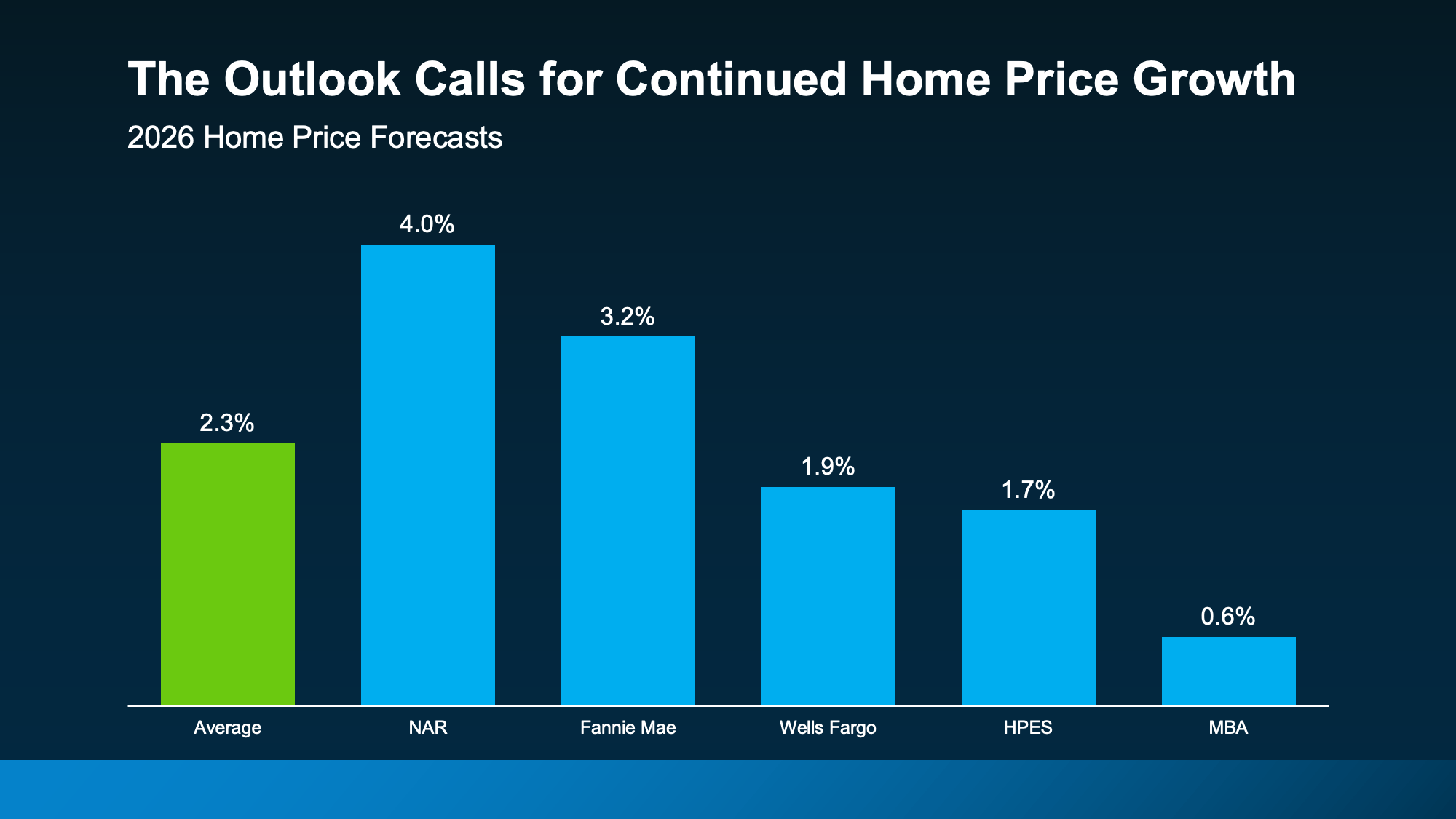
Top economists have one word to sum up the housing market for 2026: opportunity.

If a move is on your radar for 2026, there’s a lot more working in your favor than there has been in a while.

After a stretch where many people felt stuck, 2026 is shaping up to be a year with more balance, more options, and more clarity for those who want to make a move. Not because the market is suddenly “easy,” but because several key conditions are shifting.

Here’s what the experts are saying you have to look forward to.

Danielle Hale, Chief Economist at Realtor.com:

“After a challenging period for buyers, sellers and renters, 2026 should offer a welcome, if modest, step toward a healthier housing market.

The National Association of Realtors (NAR):

Top economists have one word to sum up the housing market for 2026: opportunity. Lower mortgage rates and a rising supply of homes are expected to open up the housing market . . . something the real estate industry and potential home buyers and sellers have been waiting for, following three years of stagnation.”

Mark Fleming, Chief Economist at First American:

“. . . for the first time in several years, the underlying forces are finally aligned toward gradual improvement. Mortgage rates may drift down only slowly, but income growth exceeding house price appreciation will provide a boost to house-buying power — even in a higher-rate world. Affordability won’t snap back overnight, but like a ship finally catching a steady tailwind, it’s now sailing in the right direction.

Mischa Fisher, Chief Economist at Zillow:

“Buyers are benefiting from more inventory and improved affordability, while sellers are seeing price stability and more consistent demand. Each group should have a bit more breathing room in 2026.

Why Local Insight Matters More Than Ever

Just remember, while the national outlook is improving, conditions will still be different based on where you live. Some markets will move faster than others. Some will see stronger price growth. Others will remain flat. As Lisa Sturtevant, Chief Economist at Bright MLS, explains:

Market performance will hinge on local economic conditions, making 2026 one of the most geographically divided markets we’ve seen in years.”

That’s why understanding what’s happening where you live or want to move to is key. The national trends set the stage, but local dynamics determine how they play out for you. And that’s why you need to talk with us.

Bottom Line

If you want to walk through what’s expected on Cape and southeastern Massachusetts and what trends you’ll want to take advantage of, let’s connect. You can always find us at 508-388-1994 or msennott@todayrealestate.com.

Mari and Hank

Nothing herein should be construed as investment advice. You should always conduct your own research and due diligence and obtain professional advice before making any investment decision.
Fewer Homeowners Are Staying Locked In

Life doesn’t wait for the perfect mortgage rate. Maybe you shouldn’t either.

If you’re like a lot of homeowners, you’ve probably thought: “I’d like to move… but I don’t want to give up my 3% rate.” That’s fair. That rate has been one of your best financial wins – and it can be hard to let go. But here’s what you need to remember…

A great rate won’t make up for a home that no longer works for you. Life changes, and sometimes, your home needs to change with it. And you’re not the only one making that choice.

The Lock-In Effect Is Starting To Ease

Many homeowners have been frozen in place by something the experts call the lock-in effect. That’s when you won’t move because you don’t want to take on a higher rate on your next home loan. But data from Federal Housing Finance Agency (FHFA) shows the lock-in effect is slowly starting to ease for some people.

The share of homeowners with a mortgage rate below 3% (the yellow in the graph below) is slowly declining as more people move. And while some of the people with a rate over 6% are first-time buyers, the number of homeowners with a rate above 6% (the blue) is rising as others take on higher rates for their next home: 

a graph of a graph with text

And while it may not seem that dramatic, it’s actually a pretty noteworthy shift. The share of mortgages with a rate above 6% just hit a 10-year-high. That shows more people are getting used to today’s rates as the new normal.

Some banks — like Cape Cod Five — are now offering rates in the 5% range! If you’d like more information, please let us know. We can put you in touch with a top lender at the bank, who we have worked with many times.

Why Are More People Moving Now, if It Means Taking on a Higher Rate?

It’s simple. Sometimes they can’t put their life on pause anymore. Families grow, jobs change, priorities shift, and a house that once fit perfectly may not fit at all anymore – no matter how good their rate was. And that’s okay. As Chen Zhao, Head of Economic Research at Redfin, explains:

More homeowners are deciding it’s worth moving even if it means giving up a lower mortgage rate. Life doesn’t standstill—people get new jobs, grow their families, downsize after retirement, or simply want to live in a different neighborhood. Those needs are starting to outweigh the financial benefit of clinging to a rock-bottom mortgage rate.”

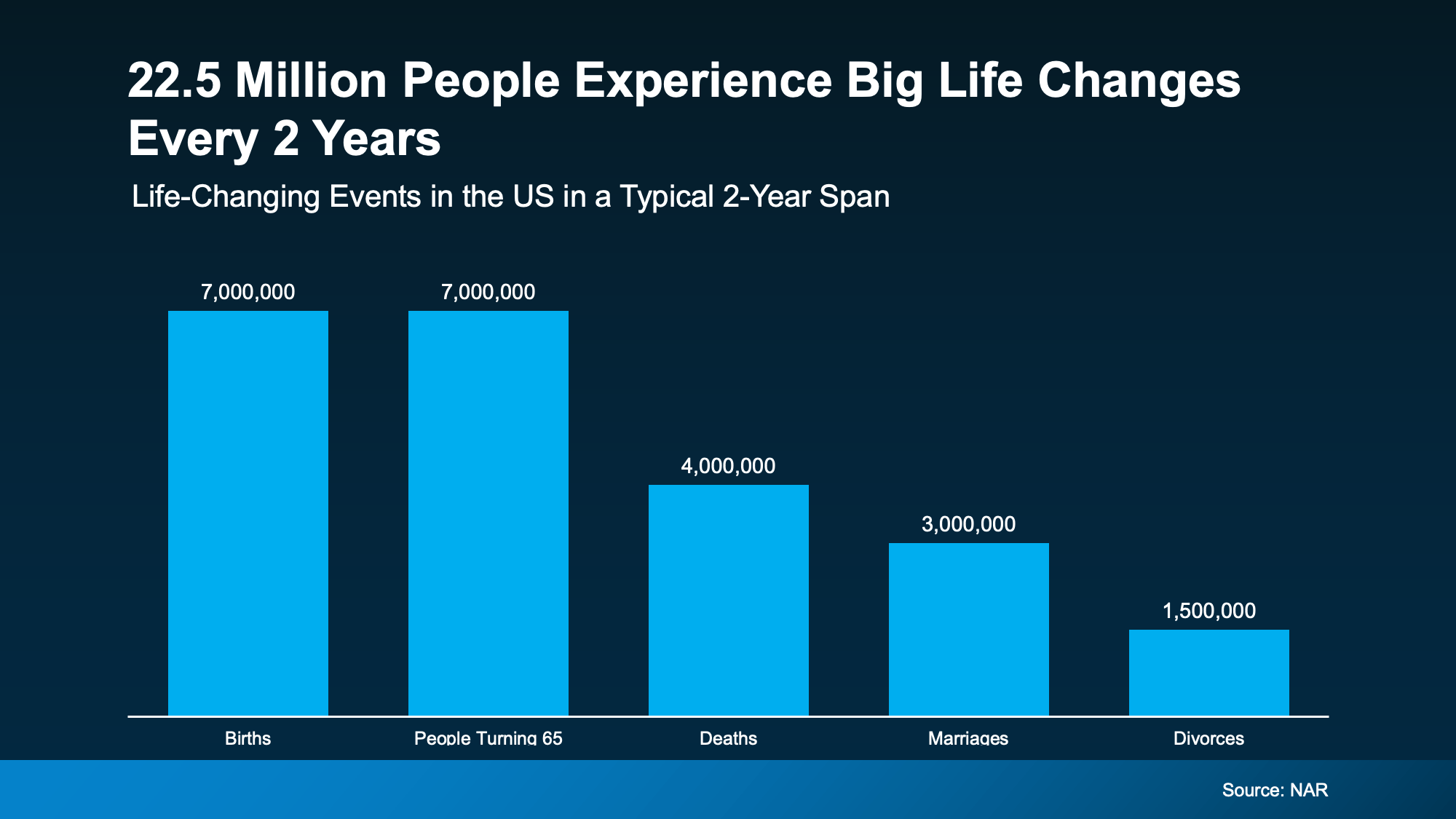
First American refers to these life motivators as the Five Ds:

  • Diplomas: People with college degrees typically earn more, and that adds up to more buying power. Maybe you bought your house when you were younger and now that you’ve graduated and have a rising career, you’re ready to move up.
  • Diapers: You’ve outgrown your space. If you’re welcoming a new baby, your current home might not be cutting it anymore.
  • Divorce: Whether it’s ending a marriage (or starting one), it can create the need for a new place to call home.
  • Downsizing: You’re ready to downsize. Maybe the kids have moved out and it’s time to simplify. Smaller house, less maintenance, more freedom.
  • Death: If you’ve recently lost a loved one, maybe you’ve realized you want to be closer to family. Life’s too short to live far from the people who matter most.

Whatever your reason, here’s what you need to think about. Yes, your low rate is great. But staying put means your life may stay on hold. And maybe that’s not working for you anymore.

According to Realtor.com, nearly 2 in 3 potential sellers have already been thinking about moving for over a year. That’s a long time to press pause on your plans. On your needs. On your family’s goals. So, maybe the question isn’t: “Should I move?”

It’s actually: “How much longer am I willing to stay somewhere that no longer fits my life?”

Bottom Line

Life doesn’t wait for the perfect rate. Maybe you shouldn’t either.

With mortgage rates down from their peak and forecast to dip slightly more in 2026, moving may be more feasible than you think. If you’re ready to see what’s possible in our market, let’s talk. You can find us at 508-388-1994 or msennott@todayrealestate.com.

We’re here to help…

Mari and Hank

Nothing herein should be construed as investment advice. You should always conduct your own research and due diligence and obtain professional advice before making any investment decision.